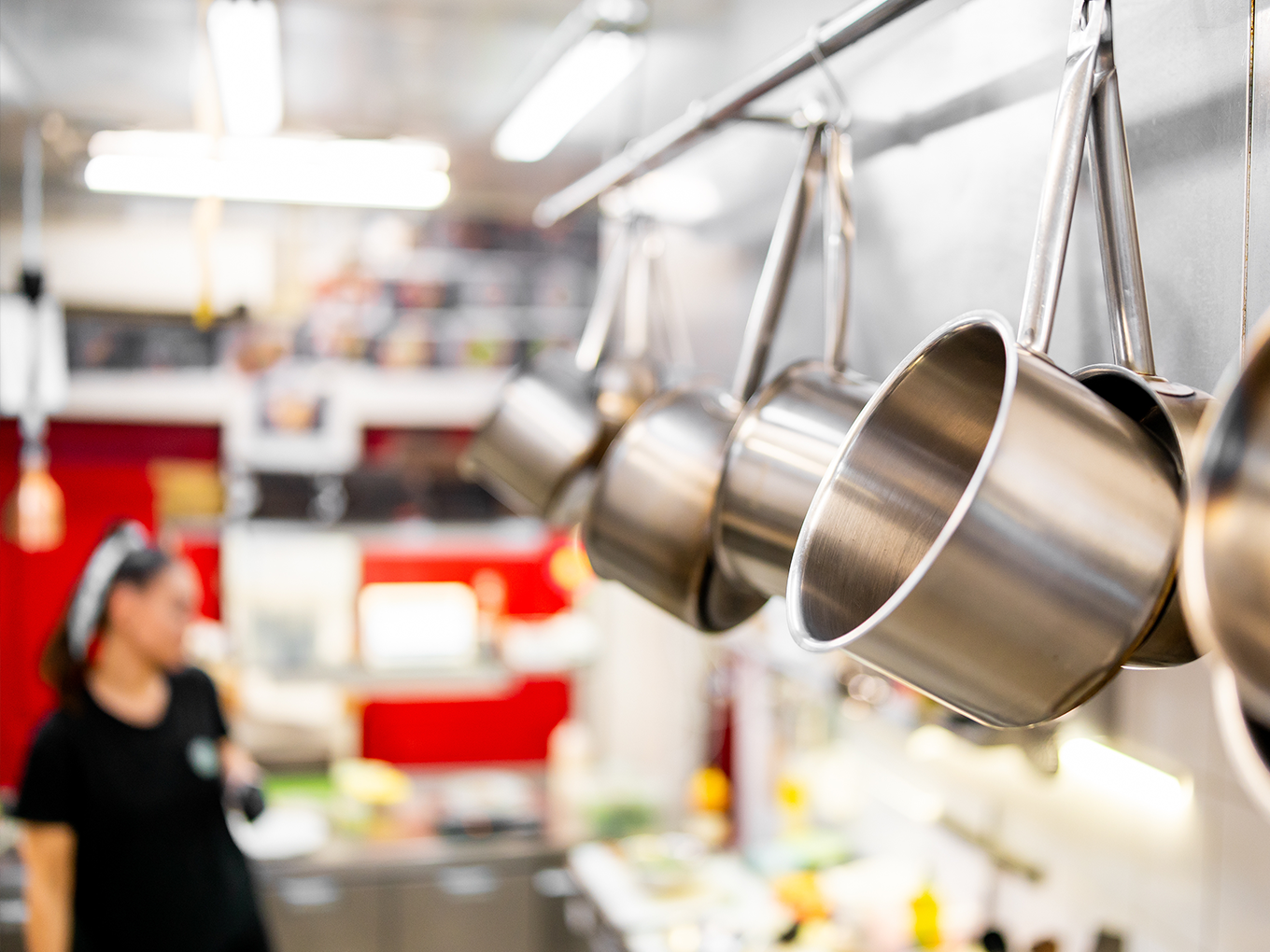

In a restaurant, there is always a risk of fire in the kitchen. Gas stoves are standard issue in restaurants; while cooking with flame has many benefits, it also poses an increased risk for fire.
Basic Fire Suppression System Functionality
Generally, fire suppression systems work in a step-by-step way to cut fuel to the fire and extinguish it before it can spread through the kitchen. It works like this:
- A fire is identified by the system triggering a signal to the control panel
- The control panel activates and
- Releases the extinguishing agent (chemical or water)
- Triggers the gas shut-off valve
- Sounds the alarm system to alert people to the fire
Most systems also have a manual release station where an employee can start the trigger if the control panel does not recognize a fire right away.
Risk Mitigation and Fire Suppression Systems
One of the most important aspects of protecting your kitchen is to regularly maintain your fire suppression system. This system is a key component of stopping a fire at the source. If the system malfunctions, protecting your employees, customers, and business comes into jeopardy. A technician specializing in fire suppression should inspect every six months (or even more frequently) to ensure there is no buildup on nozzles and that the extinguishing agent or water is present.
Regular cleaning is also part of fire suppression system maintenance. Good kitchen practices include a full scrub down every night to remove grease. A cleaner kitchen is a safer kitchen!
Some other common fire safety practices to remember are:
- Train employees on fire safety
- Clean the hood and exhaust ventilation system
- Install additional fire extinguishers in the kitchen,
Risk management can help your business minimize the chance of a loss; however, it is also important to have the right insurance coverage for your needs. Connect with a local
Small Changes, Lasting Impacts
Practicing sustainability benefits both your business and your community!
Go Electric – some restaurants are choosing to install induction cooktops rather than the more common gas cooktops. Installation tends to save costs (if building new), decreases fire risk in the kitchen, and keeps the kitchen itself cooler as heat isn’t rising from gas-powered flames.
Get efficient appliances – if you’re in the market for a new commercial cooktop, oven, or range, consider options with energy efficient design and an Energy Star rating.
Chemical Agents – some chemical agents and foams used in fire suppression systems contain chemicals that can have serious environmental effects. Consider clean agent fire or water mist fire suppression.